Monkey Hanging on Tree Redwork: A Designer's Review
When I first opened the Monkey Hanging on Tree Redwork machine embroidery design, I knew this was going to be one of those projects that either sings on a sweatshirt or falls flat depending on execution. As someone who has digitized and stitched thousands of commercial embroidery orders, I can tell you that the charm of this design lies in its redwork lineage—clean lines, single-color elegance, and a playful subject that feels both nostalgic and fresh. Let me walk you through what I see when I evaluate this as a boutique brand asset.
First Impressions: Mood, Layout, and Stitching Personality
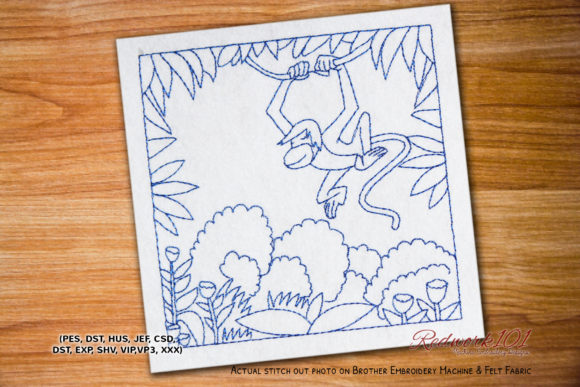
The moment I previewed Monkey Hanging on Tree Redwork, I immediately thought of vintage children's book illustrations and folk art samplers. The redwork style—typically executed in a single thread color, often red or a contrasting hue—gives this design a hand-drawn, storybook quality that feels approachable and warm. The monkey dangling from a tree branch carries a natural sense of motion and whimsy, which is perfect for casual apparel that needs a touch of personality without shouting.
Layout-wise, the composition appears balanced but not rigid. The tree branch anchors the design horizontally, while the monkey's suspended pose creates a gentle vertical drop. This asymmetry is actually a strength for hoodie design and sweatshirt embroidery because it allows the eye to travel naturally. The optional Box Stitch mentioned in the description adds a framing element, but I would personally test it both ways. On a neutral sweatshirt, skipping the box keeps the design feeling open and airy. On darker fabric, a contrasting box can create a crisp boundary that makes the redwork pop.
From a stitching personality standpoint, redwork designs rely on clear, continuous outlines and minimal fill. That means every stitch matters. The Monkey Hanging on Tree Redwork design, if digitized well, should have a smooth, flowing stitch path that avoids jump stitches and tangles. The overall mood is playful yet refined—cute without being childish, decorative without being fussy. That is a sweet spot for boutique apparel.
How This Design Performs on Sweatshirts and Hoodies
Let me paint a real picture for you. Imagine you are preparing a limited sweatshirt drop for your small online shop. You have sourced a run of premium, garment-dyed crewnecks in oatmeal, heather gray, and dusty rose. You want an embroidery design that feels curated, not generic. Monkey Hanging on Tree Redwork fits that brief beautifully.
For chest placement on a standard adult sweatshirt, I would recommend hooping the design centered at about 4 to 5 inches wide. The redwork style means the stitch count is relatively low, so the hoop size can be modest—likely a 5x7 or similar. That makes production fast and efficient, which matters when you are fulfilling orders for multiple customers or building inventory for a drop. The low stitch density also means less risk of distortion on knit fabrics, which is a common headache with dense fill designs.
I also see strong potential for sleeve accents. A small version of the monkey hanging from the branch, placed on the upper sleeve or near the cuff, would be a subtle detail that repeat buyers notice. For back designs, the full composition could sit centered between the shoulder blades, especially on oversized hoodies where the fabric offers a generous canvas. The redwork style reads well from a distance, so it works for lifestyle product photography and mockup previews where the embroidery needs to be visible in flat lays.
On pastel or neutral sweatshirt colors, a classic red thread creates a timeless, slightly rustic look. But do not be afraid to experiment. A deep forest green or navy blue thread on a cream sweatshirt would give the design a more modern, minimalist feel. The optional Box Stitch, if you choose to include it, should be in a contrasting color that complements the main thread. Just remember: the description notes that the box color is different in most designs unless it is part of the design itself. That means you have creative freedom to choose a box color that fits your brand palette.
Practical Designer Concerns: Thread, Fabric, and Durability
Every embroidery professional knows that the success of a design depends on more than just the file. Here are the practical considerations I evaluate before sending Monkey Hanging on Tree Redwork to production.
Thread color contrast. Redwork traditionally uses a single thread color, but that color needs to stand out against the fabric. On dark fabric, a bright red or even a metallic gold thread can create stunning contrast. On light fabric, a deep crimson or burgundy reads as sophisticated. If you are stitching on a busy or patterned fabric, redwork can get lost, so I recommend solid or lightly textured knits for best results.
Stitch density and fabric thickness. Redwork designs are typically low-density, which is ideal for sweatshirt materials like fleece, French terry, and cotton blends. The stitches should penetrate the fabric cleanly without excessive buildup. However, if the design has too many small details or tight curves, the needle may create large holes in loosely knit fabrics. Always test on a scrap piece of your actual sweatshirt fabric before committing to a run. A medium-weight cutaway stabilizer is my go-to for this type of design on knits. It provides enough support without adding stiffness.
Small-size readability. If you plan to offer this design on youth sizes or as a small chest logo, the monkey's features must remain clear at reduced scale. The branch and the monkey's limbs should be thick enough to register as distinct shapes. I recommend asking your digitizer or checking the original embroidery file to ensure the minimum stitch length is appropriate for small hoops. A design that looks great at 5 inches wide may turn into a muddy blob at 2.5 inches.
Washing durability. Single-color redwork designs tend to hold up well to repeated washing because there are fewer color changes and less thread buildup. However, the optional Box Stitch adds an extra layer of stitches around the perimeter, which can stiffen the fabric if the box is too dense. For a cozy seasonal apparel item like a holiday sweatshirt, I would skip the box to keep the fabric soft and breathable. For a more structured look, use a lightweight box stitch with minimal density.
Commercial Value and Brand Positioning
Let me speak directly to the business side of this. When you choose Monkey Hanging on Tree Redwork for your boutique brand, you are making a statement about your aesthetic. This design is not trying to be hyper-realistic or trendy in a disposable way. It has a handcrafted, artisan quality that resonates with buyers who value originality and craftsmanship.
For Etsy sellers and small shop owners, this design can be a differentiating factor. A quick search for monkey embroidery designs will show you thousands of options, but redwork occupies a specific niche that feels both classic and understated. Customers who purchase a sweatshirt with this embroidery are more likely to perceive it as a handmade product, even if it was produced with commercial embroidery equipment. That perception supports higher price points and stronger customer loyalty.
In terms of product value, the low stitch count means you can offer this design at a competitive price while maintaining healthy margins. The production time per piece is shorter compared to multi-color fill designs, so you can fulfill more orders in less time. For a limited drop, that efficiency is a real advantage.
I also want to emphasize the role of design assets in your marketing. The Monkey Hanging on Tree Redwork works beautifully in printable mockups and lifestyle photography. The clean lines photograph well, and the single-color palette means it coordinates with a wide range of styling. Whether you are shooting flat lays on a rustic table or model shots in natural light, the embroidery will read clearly and add visual interest without competing with the rest of the image.
Final Recommendations Before Production
Before you hoop up and start stitching, there are a few details you need to confirm. The product description mentions that the Box Stitch is optional and that the color of the outer box is different in most designs unless it is part of the design itself. That is a reminder to check your specific embroidery file. Open the file in your editing software and verify whether the box is included as a separate color layer or if it is merged into the design. If it is separate, you can easily toggle it on or off, or change its thread color to match your brand.
Also, confirm the hoop size required for your intended placement. If you are stitching on a hoodie pocket or a small sleeve area, you may need to resize the design. Make sure your digitizer or the file source provides a format that allows resizing without losing stitch quality. If you are working with a digital embroidery file from a third-party seller, test the file on a sample garment before production.
For stabilizer, I recommend a tear-away or cutaway medium-weight stabilizer for most sweatshirt fabrics. If the fabric is particularly stretchy, a cutaway stabilizer will prevent puckering. Use a sharp needle suited for your fabric type—a 75/11 or 80/12 embroidery needle works well for most knits. And always, always test your thread tension. Redwork designs rely on clean, even stitches, and any tension issues will be immediately visible.
Final Thoughts
Monkey Hanging on Tree Redwork is the kind of design that rewards thoughtful production. It is not a quick stitch-and-ship design; it is a piece that asks you to consider fabric, color, placement, and finishing. But when you get it right, the result is a premium sweatshirt that feels intentional and special. For boutique brands, Etsy sellers, and custom apparel decorators, that is exactly the kind of product that builds a loyal following.
Whether you are designing for a cozy fall collection, a playful animal-themed line, or a one-off custom order, this redwork design offers versatility, charm, and commercial viability. Take the time to test it, tweak it, and make it your own. Your customers will thank you.