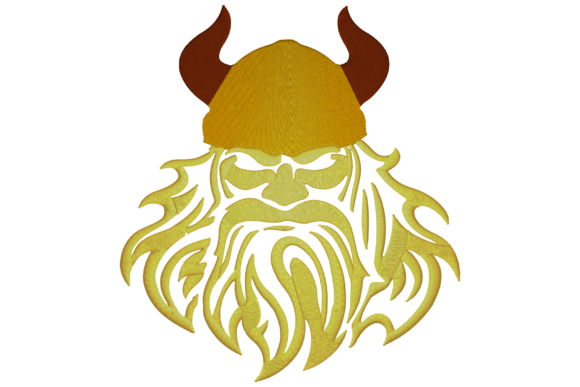
Face of Viking Warrior
When I first opened the Face of Viking Warrior embroidery file, I immediately recognized the kind of design that stops customers mid-stride at a craft fair. There is a raw, bold confidence to this face that reads clearly from across a booth table. As someone who has produced hundreds of embroidered products for weekend markets, I can tell you that the designs that sell best are the ones that communicate a story in a single glance. This Viking warrior does exactly that. It feels rugged, heritage-inspired, and deeply masculine without being overly aggressive. For any Etsy seller or small shop product maker looking to tap into the Norse, medieval, or fantasy enthusiast market, this machine embroidery design offers a strong foundation for a range of handmade products.
First Impressions: Bold, Rugged, and Booth-Ready
The Face of Viking Warrior presents a striking, stylized portrait that leans into the fierce dignity of its subject. The three-color palette keeps the design clean and manageable for production, yet it does not feel flat. The hand-digitized quality shows in the way the beard and helmet details carry a natural texture that machine-generated designs often lack. This is not a cute or farmhouse-style motif. It is a statement piece. When I picture it on my display table, I see it drawing in customers who are looking for something with weight and character. The design feels premium in its simplicity, and that is a powerful advantage for a craft fair product. Buyers are more likely to pause and pick up a piece that looks intentional and well-crafted.
Where This Design Shines on Your Table
In my own booth setup, I would test the Face of Viking Warrior across several product categories to see where it earns the most attention. Here is where I believe it will perform best:
- Tote bag design – A large, centered placement on a natural canvas tote bag is a natural fit. The warrior face becomes a wearable piece of art, and the sturdy fabric supports the stitch density well. Shoppers looking for a unique everyday bag will notice it immediately.
- Apron embroidery – For grill masters, blacksmiths, or home brewers, a Viking warrior apron communicates strength and craftsmanship. It also makes a great gift item for Father’s Day or birthday markets.
- Tea towel embroidery – While tea towels often lean toward floral or rustic themes, a Viking warrior towel can stand out in a rustic or cabin-themed booth. The key is keeping the design centered and allowing the fabric texture to contrast with the dense stitching.
- Embroidered patch – This is where the Face of Viking Warrior truly excels. As a patch, it can be ironed onto jackets, backpacks, or hats. Patches are a high-margin product that appeal to collectors and enthusiasts. The three-color palette keeps production fast and repeatable.
- Caps and beanies – A smaller version of the design on a structured cap or a beanie works well. The bold lines hold up when curved, but you will want to test the hoop size carefully to avoid distortion on the crown.
- Fabric pouches and small zipper bags – These sell quickly at craft fairs because they are affordable and easy to gift. The Viking face adds a touch of personality that stands out among generic pouch designs.
- Pillow covers – A throw pillow with the Face of Viking Warrior becomes a conversation piece in a living room or man cave. The high stitch density gives it a rich, tactile feel that buyers associate with quality.
Practical Production Notes for Batch Crafting
When I prepare a design for a weekend market, I focus on efficiency and consistency. The Face of Viking Warrior is available in six sizes, which gives you flexibility to scale it for different products. However, I recommend testing each size on scrap fabric before committing to a batch. The three thread colors are likely to be standard shades such as bronze, dark brown, and off-white or a similar earthy palette. If you are using a digital embroidery file, open it in your software and check the color sequence. Make sure the contrast between the face and the background fabric is strong enough to read from a few feet away. Dark fabric with lighter thread colors will make the warrior pop, while a light fabric with darker threads will give a more subtle, vintage feel.
For batch production, I always stitch a few test samples on different fabrics. Canvas and denim hold the dense stitching beautifully. Lightweight cotton or knit fabrics may require a more careful approach to avoid puckering. The stitch density appears to be moderate to high, which is typical for a portrait-style design. That density gives the warrior face its solid, filled appearance, but it also means you need to use an appropriate stabilizer. A tear-away stabilizer may work for stable fabrics, but a cut-away stabilizer is safer for anything stretchy or loosely woven. I recommend using a medium-weight cut-away for the best results, especially if you plan to sell the finished product to customers who expect durability.
Careful-Use Notes for Consistent Quality
Every experienced embroidery designer knows that a design that looks perfect on screen can behave differently on a machine. Here are specific caution points for the Face of Viking Warrior:
- Dense stitch areas – The beard and helmet details are likely the densest parts of the design. Watch for thread breaks or needle heating during long runs. Use a sharp 75/11 or 80/12 needle designed for embroidery, and consider a slight reduction in density if your machine has trouble.
- Tiny details – If the face includes small facial features such as eyes or rune-like accents, test them at the smallest size available. These details may blur or become unrecognizable when scaled down too far. I recommend using the medium or larger sizes for products where clarity matters.
- Small lettering – The product description does not mention lettering, but if the design includes any text, test it carefully. Small lettering on textured fabric like tea towels or caps can be hard to read.
- Thick fabric – On heavy canvas or denim, the needle may struggle to penetrate evenly. Use a heavier needle and a sharp point to avoid skipped stitches.
- Textured towels – Terry cloth or waffle weave towels can distort the design. Use a water-soluble topper to keep the stitches from sinking into the fabric pile.
- Curved cap surfaces – For caps, use a cap hoop and a floating method with firm stabilizer. The design needs to be placed carefully to avoid stretching the front panel.
- Dark fabric – If you stitch on black or navy fabric, use a white or light-colored bobbin thread and consider a layer of white cut-away stabilizer to prevent the dark fabric from showing through the stitches.
- Smaller sizes – The smallest size in the six-size set may lose detail, especially in the beard and helmet. Always test the smallest size on a patch or keychain before mass-producing.
The Selling Power of the Viking Face
From a booth display perspective, the Face of Viking Warrior has a strong magnetic quality. It is not a design that blends into the background. Customers who are drawn to Viking culture, Norse mythology, or medieval aesthetics will actively seek it out. The three-color palette also makes it easy to coordinate with other products in your booth. If you have a line of rugged, earthy, or warrior-themed items, this design can serve as a flagship piece. I have found that designs with a clear cultural or historical reference tend to generate more conversation at the table. When a customer picks up a Viking warrior tote bag, they often ask about the meaning, the history, or the inspiration. That engagement is gold for a handmade product seller. It leads to longer browsing, more items in the cart, and repeat customers.
For online listings, the Face of Viking Warrior photographs well when placed on a neutral or contrasting background. Use a printable mockup to show the design on multiple products such as bags, caps, and patches. A mockup set that includes lifestyle shots helps customers visualize the item in their own life. As an Etsy seller, you know that listing photos are the first thing buyers notice. A clear, well-lit shot of the warrior face on a finished product will increase click-through rates. I recommend investing in a few high-quality design assets such as mockup templates and close-up detail shots that show the stitch texture.
Designer’s Checklist Before You Stitch
Before you load the embroidery file and start production, take a moment to review these practical steps. They will save you time, material, and frustration:
- Test on scrap fabric – Always stitch a sample on the exact fabric you plan to use for your products. Check for tension issues, thread breaks, and design alignment.
- Check thread contrast – The three colors must stand out against your fabric choice. Lay the thread spools next to the fabric and view them from a distance under booth lighting.
- Review spacing – Ensure the design edges have enough margin for hooping, trimming, and finishing. Crowded edges can cause problems with seam allowances on bags or pillows.
- Confirm hoop size – The six sizes should fit within your available hoops. Measure the largest size you plan to use and verify that your hoop can accommodate it with room to spare.
- Inspect stitch density – If the file allows parameter adjustments, check the density map. High-density areas may need a slight reduction for softer fabrics.
- Use the right stabilizer – Match the stabilizer to the fabric weight. A cut-away stabilizer is the safest choice for most products, especially if you are selling to customers who will wash the item.
- Create at least one real mockup – A physical sample is worth more than a hundred digital renders. Stitch the design onto a finished product and display it in your booth. Customers want to see and feel the quality.
- Compare fabric colors – The warrior face will look different on charcoal, olive, navy, natural, and black fabric. Test a few options and choose the one that makes the design pop most.
- Confirm commercial licensing – The product description states that this is a digital file available in six sizes, digitized by hand. Before selling any commercial embroidery products, verify that your license allows you to sell the finished items. If you are unsure, contact the designer directly. This is a critical step for any digital embroidery file purchase.
The Face of Viking Warrior is a design that rewards careful preparation. When you take the time to test, adjust, and match it to the right products, it becomes a reliable seller in your booth rotation. I have seen similar bold portrait designs become the anchor of a craft fair product lineup, drawing in customers who are looking for something unique and well-made. If you are ready to add a warrior to your table, this design gives you a strong starting point. Just remember that the quality of the finished product depends on your attention to the details behind the stitching. Nail those details, and the Face of Viking Warrior will earn its place in your best-selling lineup.