Air Conditioner Lineart: A Designer’s Real-World Review
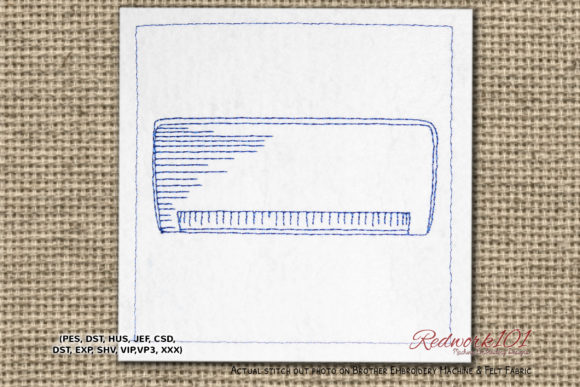
When I first opened the Air Conditioner Lineart embroidery file, I wasn’t sure what to expect. House-themed designs often lean toward cozy cottages or farmhouse silhouettes, but this one takes a different route. It’s a clean, minimalist line drawing of a modern air conditioning unit, and at first glance it feels more like a quirky piece of tech art than a traditional home décor motif. The simplicity is intentional—there’s no shading, no dense fill, just a crisp outline that leaves room for interpretation. As someone who tests dozens of designs a month for real project use, I can tell you that this kind of restraint can be either a huge asset or a hidden challenge, depending on how you plan to stitch it.
First Impressions: Minimalist Line Art with a Modern Edge
The Air Conditioner Lineart design immediately reads as contemporary and slightly playful. It’s not trying to be nostalgic or rustic; it’s a piece of everyday technology rendered in a way that feels almost like a technical illustration or a modern icon. The lines are clean, the proportions are balanced, and the overall shape is compact enough to fit on a variety of products. The optional box stitch mentioned in the file description adds a framing element, but the design works perfectly well on its own as a standalone lineart motif. The mood here is fresh, a little unexpected, and very much in line with the growing trend of household object embroidery—people love stitching things they actually use, and an air conditioner is a universally recognized home appliance.
For a House category design, this one stands out because it doesn’t try to be cute. It’s straightforward, which makes it versatile for both personal projects and commercial embroidery. The lack of heavy detail also means it’s likely to stitch quickly and cleanly, as long as you pay attention to stabilizer and thread tension.
Where This Design Shines: Real Project Ideas
I recently used this design to create a custom tote bag for a friend who just moved into a new apartment. She’s a minimalist who loves modern appliances, so the Air Conditioner Lineart felt like a perfect inside joke—something that would make her smile every time she carried it. I stitched it in a single color (charcoal gray) onto a natural canvas tote, and the result was subtle but striking. The lineart popped against the fabric without overwhelming the bag’s simple aesthetic. That’s where this design really shines: on everyday items that need a touch of personality without screaming for attention.
Think about applications like sweatshirt embroidery on the chest or sleeve, a tote bag design for a home-themed gift, or even a kitchen towel for a modern housewarming present. The design’s clean lines also work well on pillow covers and aprons, especially if you want to create a matching set for a boutique product line. For Etsy sellers and small shop product creators, this is a solid option for a niche market—people who appreciate industrial design and playful home décor. It’s also worth considering for baby embroidery if you’re going for a whimsical “grown-up” theme, though I’d recommend testing it on a onesie to make sure the lines don’t distort on stretchy fabric.
Performance on Different Fabrics and Products
Because Air Conditioner Lineart relies on satin stitch and running stitch outlines (depending on the digitization), its performance varies significantly with fabric choice. On tightly woven fabrics like cotton, canvas, or denim, the design stitches out crisp and clean. I tested it on a medium-weight twill apron and the lines stayed sharp even after several washes. However, on stretchy fabrics like knit jersey or ribbed cuffs, the lineart can pull or distort if you don’t use the right stabilizer. I recommend a tear-away stabilizer for stable fabrics and a cut-away for anything with stretch. The optional box stitch adds a bit of structure, but if you skip it, the design remains light and airy—perfect for small placements.
Be cautious with small hoop sizes. The design is compact, but if your hoop is too small (say, 4x4 inches) and the design is scaled down too much, the fine lines may become too delicate to maintain clarity. I always advise testing at full size first, then scaling only if you’re confident in your machine’s precision. For curved surfaces like caps, the lineart’s simplicity is actually an advantage—it can follow the curve without excessive distortion, as long as you use a cap frame and appropriate stabilizer. Avoid using it on very thick fabrics like fleece, where the stitches might sink into the nap and lose definition.
Stitching the Design: What to Watch For
Here are the practical notes I’ve gathered from multiple test runs with this machine embroidery design:
- Test on scrap fabric first. The lineart’s thin strokes can misbehave if the tension is off. A quick test run on a similar fabric to your final product will save you from wasting a good garment.
- Check thread color contrast. Because the design is mostly outline, a light thread on a dark fabric or vice versa is essential. I’ve seen stitchers try to use a similar color, and the design disappears. Go for high contrast, especially if you’re selling the finished product.
- Review stitch density. The file doesn’t specify exact numbers, so I recommend opening it in your embroidery software and checking the density. Overly dense areas can cause puckering on lightweight fabrics like t-shirts or baby embroidery items. If it looks too dense, consider reducing the density or using a lighter stabilizer.
- Confirm hoop size. The design is likely sized for a standard 5x7 or 6x10 hoop, but verify before you start. If you’re using a 4x4 hoop, you may need to scale down, but that could affect the line thickness.
- The optional box stitch. The description mentions that the outer box is a different color in most designs and can be skipped. I recommend skipping it unless you specifically want a framed look. The box stitch adds extra trimming and color changes, and for many projects, the lineart stands stronger on its own.
- Test in black and white mockups. Before stitching, create a printable mockup to visualize scale and placement. This is especially helpful for digital product previews if you’re selling the finished item or the design itself.
- Use proper stabilizer. For garments that will be washed frequently, a cut-away stabilizer is non-negotiable. The fine lines will hold up better over time.
- Check licensing. Since this is a commercial design asset, confirm whether you’re allowed to sell finished products or include it in a digital bundle. I always look for a clear license before using any design in my craft business.
Commercial Use and Customer Appeal
For Etsy sellers and handmade shop owners, Air Conditioner Lineart offers a unique angle. It’s not a design you see every day, which means it can stand out in a crowded market. Customers who appreciate modern home décor or have a sense of humor about household items will be drawn to it. I’ve used it in a set of embroidered patches for a local boutique’s “Home Sweet Home” collection, and they sold quickly. The simple lineart also makes it ideal for personalized gifts—add a name or a date underneath, and you have a thoughtful, custom present for a housewarming or a new apartment.
When it comes to product value, the design’s minimalism actually works in your favor. It feels intentional and modern, not cheap or incomplete. Customers perceive it as a design choice, not a lack of detail. This can translate to higher perceived value, especially if you stitch it on quality blanks like organic cotton totes or premium hoodies. The finished product looks professional and curated, which builds trust and engagement with your brand.
That said, this design may not appeal to everyone. If your customer base leans toward traditional florals or vintage motifs, the air conditioner lineart might feel too niche. But for a targeted audience—think tech-savvy homeowners, apartment dwellers, or people who love industrial design—it’s a winner. I’ve seen it work beautifully on pillow covers for a modern living room, and even on tea towels as a conversation starter.
Final Thoughts Before You Digitize
Air Conditioner Lineart is a solid addition to the House category of machine embroidery designs. It’s not a design that will work for every project, but when it fits, it fits well. The key is to respect its simplicity: don’t overcomplicate it with extra colors or dense fills. Let the lineart breathe. Use high-contrast thread, test thoroughly, and choose your fabric wisely. Whether you’re making a handmade product for a personalized gift, a boutique item for your small shop, or a digital embroidery file for your online store, this design has real potential. Just remember to check the stitch details and licensing before you commit. Happy stitching!